

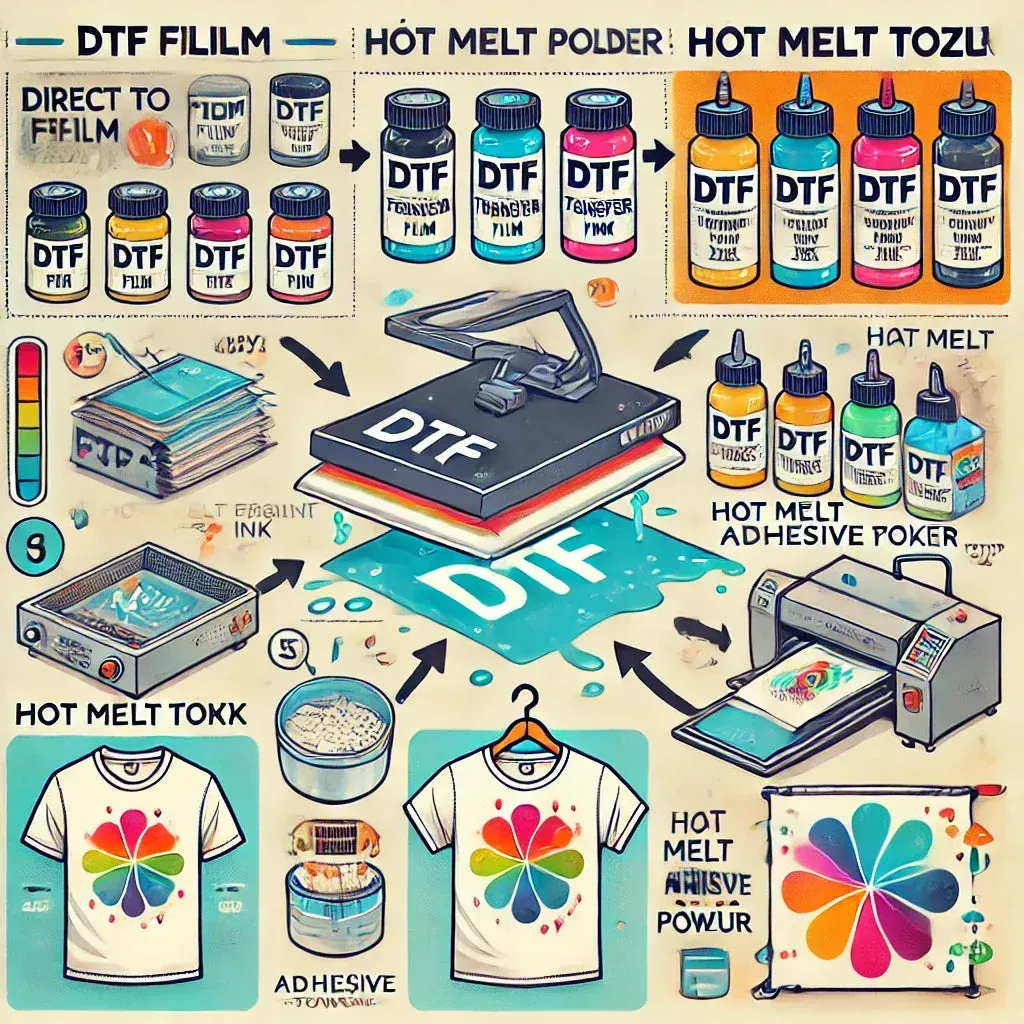
DTF film explained is a topic that has rapidly gained attention in the apparel industry as more brands and shops explore alternative garment printing methods. Direct-to-film printing represents a shift in how designs are transferred onto fabrics, offering a balance of efficiency, durability, and versatility. Understanding How DTF works helps shops compare performance with other methods and highlights the benefits of DTF film benefits for small runs and production. DTF vs DTG comparisons show how the two approaches differ in color depth and texture on different fabrics. Whether you run a design studio or a print shop, exploring garment printing with DTF can guide smarter equipment choices and workflow optimization.
In other terms, this approach is often described as film-first transfer printing for garments. You might also hear references to PET transfer film, heat-press technology, and ink-on-film systems that enable bold colors on a wide range of fabrics. This LSIs-oriented framing emphasizes the same core idea: a printable image is encapsulated on a carrier film and then bonded to textiles via heat and pressure. Practically, designers and shop operators think in terms of flexibility, on-demand production, and substrate compatibility, rather than a single brand name. By treating the concept with LSIs, teams can explore related terms to assess service options, cost structure, and workflow efficiencies.
DTF film explained: A practical overview of Direct-to-Film printing for apparel
DTF film explained introduces a method that has reshaped how designs travel from digital files to fabric. Direct-to-Film printing uses a PET transfer film as a carrier for the ink image, including a white underbase, which is later transferred to garments through heat and pressure. This creates a balanced approach that sits between traditional screen printing, DTG, and sublimation, offering practical advantages in color fidelity, versatility, and workflow flexibility across diverse fabric types.
In practice, the concept centers on printing a complete design onto a film, then moving the image onto the garment with a controlled heat press. The film acts as a stable intermediary, enabling consistent results whether you’re decorating dark shirts or light fabrics. For teams evaluating equipment choices, understanding DTF film explained helps reveal how the transfer process can simplify color management and scale up production without sacrificing image quality.
How DTF works: From design to transfer
How DTF works begins with a digital design that is printed onto a clear PET transfer film using a four-color CMYK ink set and built-in white ink for opacity. This first step creates a faithful color base that can reproduce fine lines and vibrant gradients on a range of textiles. The process then adds a layer of adhesive powder to the wet ink, which is melted and cured to ensure the ink adheres securely to the film before transfer.
The final steps are straightforward and repeatable: align the film with the garment, apply heat and pressure, and peel away the carrier to leave the ink image bonded to the fabric. This sequence—print, powder, cure, transfer—embodies the practical core of Direct-to-Film printing and explains why many shops find it reliable for varying order sizes and fabric types. The predictable transfer mechanics also support consistent results when switching fabrics or working with complex artwork.
DTF film benefits: color, durability, and workflow efficiency
DTF film benefits cover a wide spectrum of gains that appeal to brands and printers alike. The white underbase available in DTF transfers enables bright, opaque prints on dark garments, ensuring that logos and photos retain clarity and punch. Crisp line work and smooth gradients become feasible for intricate designs, which is a strong advantage for fashion and branding projects.
Beyond color performance, DTF film benefits include versatility across fabrics such as cotton, blends, and polyester, expanding product lines without needing separate workflows. The process supports scalable production, as designs can be prepared in advance and pressed in sequence. Depending on volumes and equipment, per-unit costs can stay competitive, especially for smaller runs or on-demand production, while durability and wash resistance make the results suitable for performance wear and streetwear alike.
DTF vs DTG: key differences for garment production
DTF vs DTG is a common comparison when evaluating Direct-to-Film printing. DTG excels on light fabrics with a soft hand feel and high color fidelity but can struggle with solid color coverage on dark garments unless an underbase is used. DTF, in contrast, often handles dark fabrics more reliably due to the white ink base, enabling more opaque color layers without expensive adjustments.
In terms of workflow, DTG requires direct garment printing, while DTF uses a two-step transfer approach that can be advantageous for scaling across different fabric types and maintaining a consistent transfer method. Durability and wash performance are similar in many cases, but results depend on fabric choice, ink formulation, and curing/pressing parameters. Testing both methods on your target garments helps determine which path best aligns with your product goals and customer expectations.
Planning a successful DTF implementation: equipment, materials, and testing
Planning a successful DTF implementation starts with selecting compatible equipment and materials. A DTF printer capable of handling white ink, reliable transfer film stock, and an adhesive powder tailored for the process establish the foundation. A curing step, such as a tunnel dryer or a suitable heat source, and a high-quality heat press complete the essential workflow for reliable transfers.
Material selection and testing are equally important. Film options vary in thickness, clarity, and tack, while adhesive powders differ in formulation and release characteristics. Running tests on representative garments helps confirm color accuracy, adhesion, and hand feel before committing to a broader production run. Documenting results creates a repeatable process that supports consistent output as you scale.
Practical considerations and best practices for garment printing with DTF
Practical considerations for garment printing with DTF include managing the perceived hand feel and ensuring the print remains vibrant after washes. When done well, DTF transfers can feel comparable to other methods while preserving color brightness, though the added film layer may be noticeable under close inspection. Fine-tuning heat, pressure, and curing times helps achieve the desired hand and durability.
Maintenance and long-term costs are another factor. With more moving parts, routine cleaning and calibration become essential, including print-head care, film handling, and powder application. Establishing a routine for maintenance and color verification supports consistent results as you scale production, and pairing a robust workflow with effective consumable management helps sustain quality across batches.
Frequently Asked Questions
DTF film explained: What is Direct-to-Film printing and how does the film carrier work?
DTF film explained shows Direct-to-Film printing where designs are printed on a clear PET transfer film using CMYK inks plus white ink. The film acts as a carrier; after printing a layer of adhesive powder is applied and cured, and the transfer is heat pressed onto the fabric to produce the final image. This approach supports vibrant color on many fabrics and simplifies production by using a single transfer for multiple garments.
DTF film explained vs DTG: what are the key differences in workflow and fabric compatibility?
DTF film explained contrasts with DTG in that DTF uses a two-step transfer (print on film, then transfer to fabric) and handles dark fabrics well thanks to the white underbase, while DTG prints directly on fabric and can struggle on dark garments without underbase. DTG often excels on light fabrics with soft hand, but DTF offers broader fabric compatibility and scalable throughput.
How DTF works in the DTF film explained framework?
How DTF works within the DTF film explained workflow involves four core steps: print on the transfer film, apply adhesive powder, cure the powder, and transfer the image to fabric with heat. The white ink builds opacity for dark fabrics, and the film carrier enables consistent results across cotton, blends, polyester, and other fabrics.
DTF film benefits: what advantages does Direct-to-Film printing offer for garment printing with DTF?
DTF film benefits include strong color reproduction with an opaque white underbase on dark fabrics, broad fabric compatibility (cotton, blends, polyester), a scalable workflow with pre pressed transfers, potential cost efficiency for small runs, and durable prints when properly cured and pressed.
Garment printing with DTF: in the DTF film explained framework, what use cases show its strengths?
Garment printing with DTF shines in on demand and small batch runs, fast design iterations for fashion labels, and durable, vibrant transfers for sports teams, schools, and clubs across a range of fabrics. It also supports promotional items and versatile product lines beyond traditional methods.
Plan for a successful DTF implementation: what equipment and workflow does the DTF film explained guide recommend for Direct-to-Film printing?
A successful DTF implementation recommends a DTF printer capable of white ink, reliable transfer film stock, adhesive powder, a curing step (such as a tunnel dryer or appropriate heat source), and a quality heat press. Also optimize designs with correct color profiles, run tests on representative garments, and maintain a production workflow and regular maintenance for consistent results.
| Aspect | Key Points |
|---|---|
| What is DTF film explained? | Direct-to-Film printing uses a PET transfer film printed with CMYK plus white ink. The film acts as a carrier to transfer the image onto fabric, positioning DTF as a middle ground between screen printing, DTG, and sublimation. This approach supports reliable color reproduction, white underbase on dark fabrics, and a scalable workflow for various order sizes. |
| How the workflow works | Print design onto a clear PET transfer film (with white ink in the base). Apply adhesive powder, cure the powder, and then transfer the image to fabric using heat and pressure. |
| Core steps (print, powder, cure, transfer) | Print the design, apply and cure adhesive powder, then press the transfer onto the garment to complete the image transfer. |
| Materials & equipment | DTF printer capable of white ink, PET transfer films, adhesive powders, curing equipment, and a high-quality heat press. |
| Key benefits | Strong color reproduction with a white underbase on dark fabrics; crisp lines and gradients; works on cotton, blends, polyester, and other fabrics; scalable workflow; potential for competitive per-unit costs; durable prints when properly cured and pressed. |
| DTF vs DTG comparison | DTF handles dark garments better thanks to the white underbase; DTG offers soft hand-feel on light fabrics but can require underbase adjustments for darks. DTF uses a two-step transfer that can be advantageous for multiple fabric types and scalable production. |
| Planning for implementation | Choose compatible equipment and materials, optimize designs for color profiles and resolution, test with representative garments, and plan for film and powder selection, curing, and workflow management. |
| Practical considerations | Print feel and hand may be affected by the film transfer; maintenance and consumables require regular attention; consistent quality depends on proper heat, pressure, curing, and cleaning routines. |
| Applications & use cases | On-demand and small runs for custom apparel; fashion drops and quick iteration; durable, vibrant designs for sports teams, schools, and promotional items across cotton, blends, and poly fabrics. |
| Design considerations & best practices | Prepare artwork with accurate color profiles, high resolution, clean separations, and sufficient white underbase on dark fabrics to ensure bright, true-to-original colors and sharp details. |