

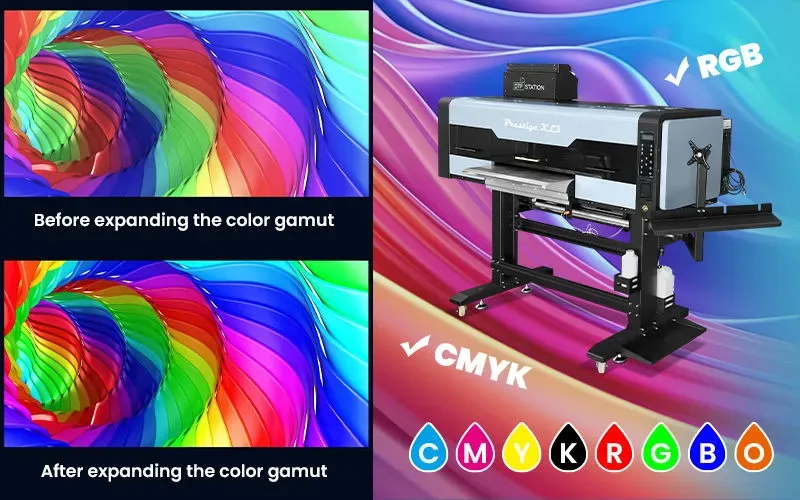
DTF printing color fidelity is the compass of garment decoration, translating digital art into fabric with true, stable hues that remain consistent under varied lighting, fabric textures, and viewing angles. Beyond brightness, it means how accurately the artwork is reproduced, how consistent colors stay across batches, and how well the result endures through wear and repeated washing. Choosing DTF pigment inks and optimizing the curing process helps lock in hue accuracy and color saturation from print to garment, while preserving edge definition, reducing color cast, and avoiding halo effects. A robust, repeatable workflow minimizes color shifts and supports reliable results across different fabrics, production days, and operator hands, empowering brand consistency and predictable turnaround times. In this guide, we explore how pigment ink strategies, careful temperature control, calibration routines, and finishing options interact to sustain color fidelity for market-ready prints.
Put differently, the topic centers on preserving color integrity when transferring digital artwork to textiles. From a technical perspective, the aim is faithful color reproduction, stable hues across runs, and resistance to fading after repeated wear and washes. You might see LSI-inspired terms like color accuracy in textile prints, color management for heat-transfer processes, and repeatable color consistency across production lots. A practical approach emphasizes calibration, ICC profiles, soft proofing, and real-fabric testing to ensure the digital design translates as intended. By framing the goal in perceptual color rendering, workflow optimization, and durable finishes, teams can align creative intent with garment reality.
DTF printing color fidelity: Mastering Hue, Saturation, and Gamut
Color fidelity in direct-to-fabric (DTF) printing is the compass that guides how closely a garment’s final artwork matches the original design. It’s about hue accuracy, accurate color saturation, and maintaining tonal balance across fabrics and batches. A high-fidelity result requires careful calibration, proofing, and an understanding of how the inks interact with the textile substrate. By focusing on color management principles, you can predict how digital colors will appear after transfer and finishing, ensuring the print remains faithful to the artwork from first stitch to the last wash.
To achieve true DTF printing color fidelity, integrate a repeatable workflow that ties together pre-treatment, ICC profiles, monitor soft-proofing, and color targets. Consider the role of DTF pigment inks in expanding your color gamut while preserving edge sharpness and white purity. By aligning curing steps and finishes with your color goals, you can reduce drift between runs and deliver market-ready results that stay true to your client’s palette.
DTF pigment inks and color accuracy in DTF printing
DTF pigment inks are a foundational element of color accuracy in DTF printing. Their lightfastness and color stability contribute to more reliable reproduction on a range of fabrics, especially natural blends where dye-based inks might fade or shift over time. When pigment inks lay down a thin, durable surface film, they help preserve the integrity of skin tones, blues, and reds, supporting crisp edges and clean whites that align with the original artwork.
However, pigment inks are not a universal fix. Achieving optimal color accuracy in DTF printing requires tuning print head settings, ink density, and substrate pre-treatment to avoid issues such as color casting or diminished vibrancy on certain fabrics. The right combination of pigment inks, substrate preparation, and a calibrated workflow helps maximize color gamut while maintaining consistent saturation and detailing across jobs.
DTF curing temperatures: Achieving consistent color and durability
Curing is where pigment particles fuse with fabric fibers and the protective film adheres, making curing temperatures a pivotal factor for color fidelity. Incorrect temperatures or dwell times can alter color shifts, gloss, or adhesion, impacting how colors appear after transfer and finishing. In DTF, precise control of curing temperature, time, and pressure helps lock in hue, saturation, and contrast while maintaining substrate integrity.
A robust approach uses a calibrated heat press and test patches that reflect real garment weights and fabrics. By validating DTF curing temperatures and associated dwell times with representative samples, you minimize color drift between runs and ensure a stable, repeatable appearance from print to finish. This disciplined approach is essential for maintaining color accuracy across multiple batches.
DTF finishes and finishing options for color stability
Finish options shape how color appears after printing, affecting saturation, contrast, and perceived depth. Glossy finishes can intensify color richness and sharpness, while matte finishes reduce glare and soften certain hues. The choice of finish interacts with the pigment ink layer and the curing process, so selecting finishes should align with garment use, lighting conditions, and care expectations.
Testing finishes on the exact fabrics and dyes used in production is essential. A finish that works well on polyester may subtly alter color on cotton blends. Incorporating finish testing into your color management workflow helps ensure color fidelity remains consistent across product lines, with predictable results whether you’re aiming for vibrant artwork or more subdued tones.
DTF printing workflow for reproducible color management
A reliable DTF printing workflow emphasizes repeatability, verification, and continual calibration. The workflow should incorporate color management, proofing, and reproducibility checks at multiple stages—from digital pre-press to the final press finish. Using ICC profiles tailored to your printer, ink set, transfer film, and fabric creates a predictable baseline for color output and reduces surprises in production.
Practical steps include soft proofing against calibrated references, producing standard color patches, and running wash-fastness and lightfast tests alongside production. Fine-tuning ink density and head settings, along with monitored curing parameters, helps you tighten color consistency. Keeping a documented process for pre-treatment, film transfer, and finishing ensures color fidelity is reproducible across runs and product lines.
Color management, proofing, and reproducibility in DTF color reproduction
Effective color management hinges on a well-planned mix of ICC profiles, soft proofing, and objective color targets. ICC profiles tailor workflow to your specific printer, ink set, transfer film, and fabric, minimizing device- and material-induced color shifts. Soft proofing allows you to preview how colors will render on actual fabrics before committing to a print run, saving time and reducing waste.
Proofing and reproducibility are about consistency as you scale. Maintain standardized substrates, pre-treatment methods, and test patches to verify that the final output aligns with the target palette. By integrating DTF pigment inks, calibrated curing temperatures, and well-chosen finishes into the broader DTF printing workflow, you’ll deliver reliable, market-ready color reproduction that meets client expectations and brand standards.
Frequently Asked Questions
What is DTF printing color fidelity and why is it important when using DTF pigment inks?
DTF printing color fidelity is the faithfulness with which artwork colors are reproduced on fabric, including hue, saturation, and contrast. DTF pigment inks play a key role, offering better lightfastness and color stability than some alternatives, especially on blends. Achieving fidelity depends on a repeatable workflow and proper curing and finishing steps to minimize color drift from proof to garment.
How do DTF pigment inks affect color accuracy across different fabrics?
DTF pigment inks influence color accuracy through their color gamut and how they interact with various substrates. Pre‑treatment and fabric choice affect ink uptake, so calibration and color management (ICC profiles and soft-proofing) are essential to keep colors consistent. Regular proofs and wash testing help ensure color accuracy remains stable across production runs.
Why are DTF curing temperatures critical for maintaining color fidelity in DTF printing?
DTF curing temperatures are critical because heat affects film coalescence, adhesion, and pigment behavior. Use a calibrated heat press and verify temperature with patches reflecting your garment weight and fabric; avoid under- or over-curing that can dull or distort colors. Incorporating controlled curing into your DTF printing workflow keeps color output consistent across runs.
What role do finishes play in color stability and vibrancy for DTF color fidelity?
Finishes influence color stability and perceived vibrancy after printing. Glossy finishes can boost saturation, while matte finishes reduce glare and can subtly affect how colors read on different fabrics. Always test finishes with your pigment inks on the fabrics you use and align with your color-management goals.
What does a robust DTF printing workflow look like to improve color fidelity?
A robust DTF printing workflow includes: calibrating your monitor and printer together, using ICC profiles, soft-proofing artwork, printing color patches for every run, maintaining consistent substrate pre-treatment, tuning ink density, and validating curing with test patches. It also involves selecting finishes suitable for the product and performing wash and lightfast tests over time.
What common pitfalls affect color accuracy in DTF printing and how can they be avoided?
Common pitfalls include fabric variability causing color shifts, inconsistent curing, and skipping color management steps. Avoid these by using fabric-specific profiles, calibrated curing routines, a defined workflow, and routine validation with color targets. Always verify proofs against production garments and run targeted tests when introducing new materials.
| Aspect | Key Points |
|---|---|
| Color Fidelity: Definition and Goals |
|
| Pigment Inks: Role and Considerations |
|
| Curing Process: Temperature, Time, and Pressure |
|
| Finishes and Post-Processing |
|
| Color Management and Proofing |
|
| Practical Workflow to Improve DTF Color Fidelity |
|
| Common Pitfalls and How to Avoid Them |
|
| Case Studies: Real-World Lessons |
|